 Crazyserver


 Espagne

-
Nº21
 Date : 2013-09-28 - 09:30
-
 Profondeur Max: 25.9m Durée : 34mins
Photos

Aucune photo sur cette plongée
- Temp: Surf 23°C Fond 18°C
- Type de plongée : Loisir, Profonde, Photo, boat
- Visibilité : Moyenne Type d'eau Salée
Equipement particulier utilisé
- Détendeur: Cressi Sub - Ellipse Balanced / MC 9 - SC
- Combi humide: Aqualung - Iceland 7 mm
- Lest : 6 kg
Récemment sur Llafranc
Photos récentes sur Llafranc
Centre de plongée & Palanquée
 Plongée avec Triton Diving
 Palanquée :
Edu,
Juanma,
Yolanda,
David,
Victor,
Roger,
Noemi,
Gemma

URL pour ce spot :
- Site :
- Pays
- Zone :
- Mer/Océan/Lac/Rivière :
Profil de plongée
- 1. Air
- 12L Steel 190 → 50 bar
- Profondeur moyenne: 15.2m
Données fournies par EOL.org
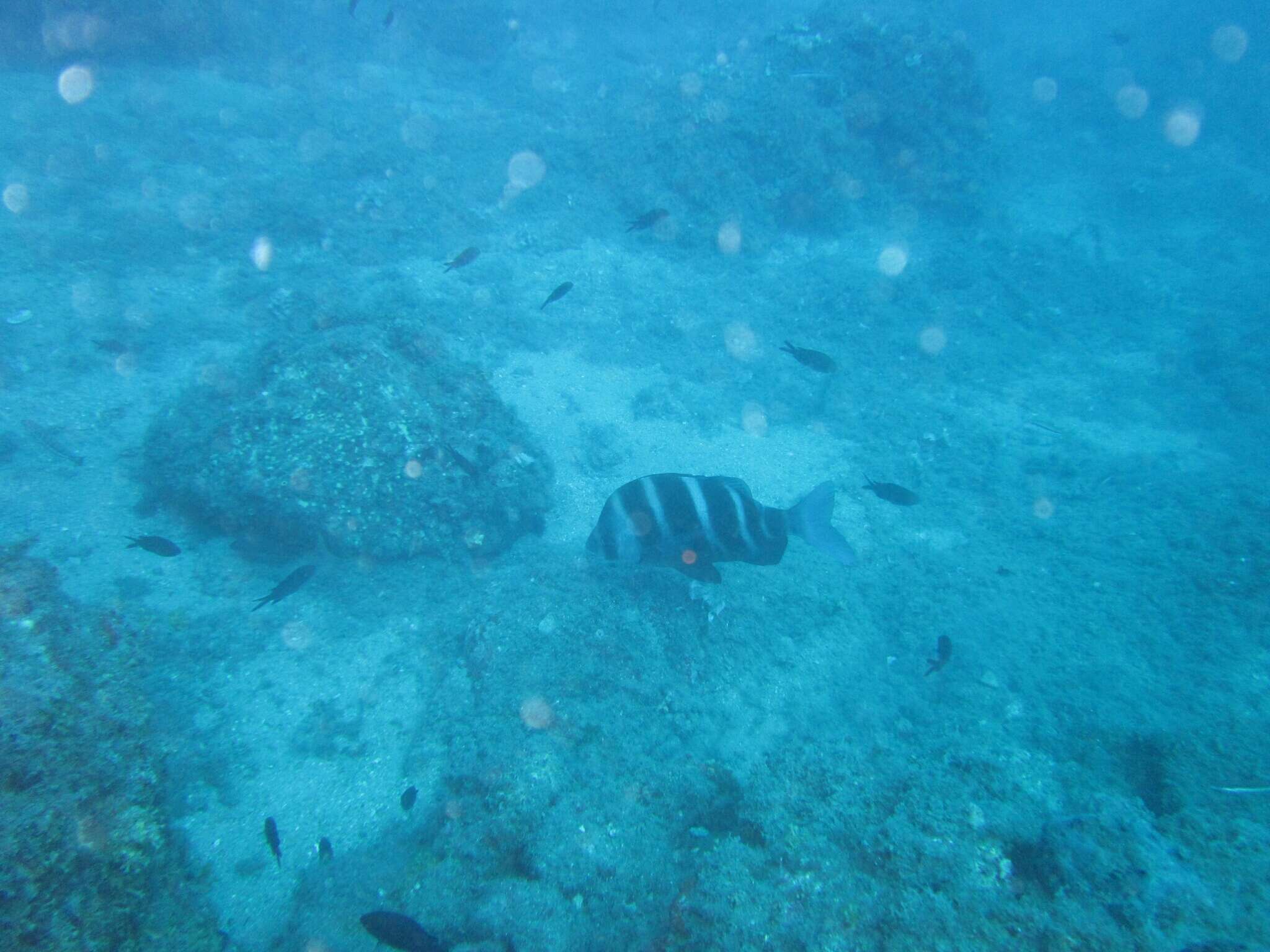
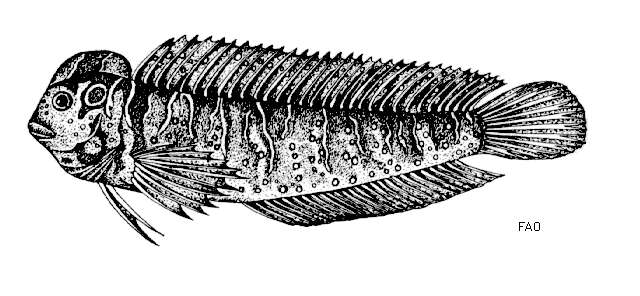
Espèces identifiées
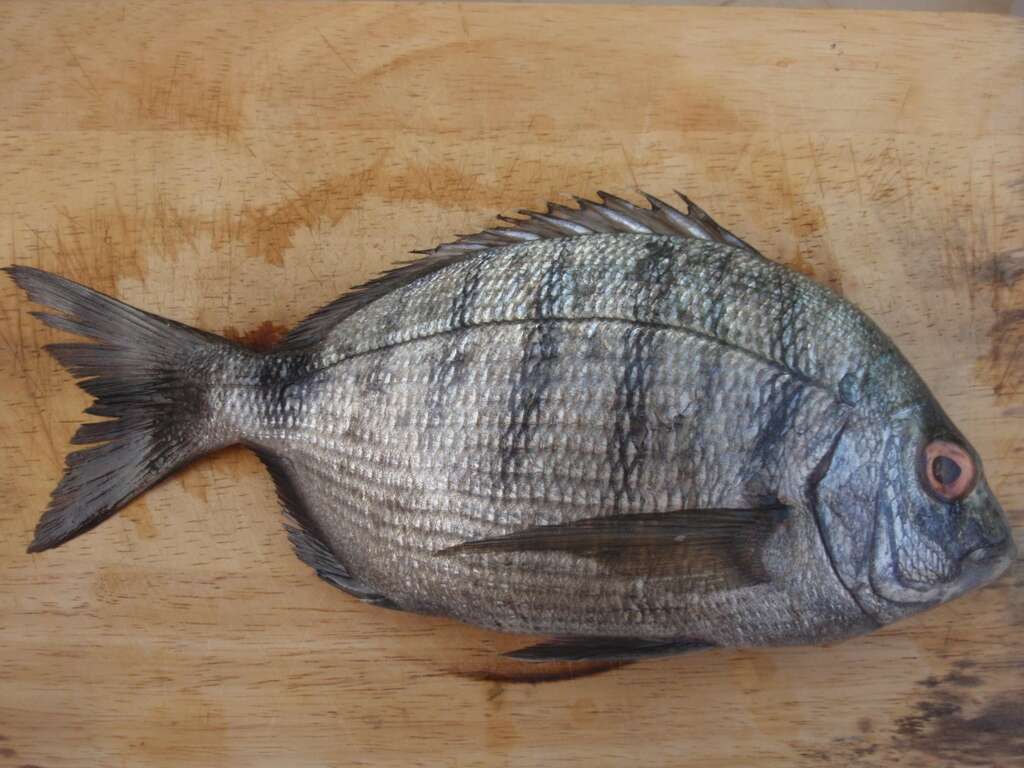
Lithognathus mormyrus (Linnaeus, 1758) (Striped seabream)
Found on the shelf, over sandy and muddy bottoms as well as seagrass-beds and estuaries. Gregarious, sometimes forming sizeable schools. Feeds on worms, mollusks and small crustaceans. Protandric hermaphrodite . Flesh excellent ; sold fresh and dried.
Thalassoma pavo (Linnaeus, 1758) (Ornate wrasse)
Inhabits coastal waters near rocks and eel-grass beds. Usually solitary, sometimes in small groups. Feeds on small mollusks and crustaceans . Protogynous hermaphrodite, with distinct sexual dichromatism . Eggs are pelagic .
Symphodus tinca (Linnaeus, 1758) (painted wrasse)
Littoral, found near rocks mainly in eel-grass beds, sometimes in salty lagoons. Often gregarious. Nest of seaweed built and kept by male with one or more females spawning. Feed on sea urchins, ophiuroids, bivalves, shrimps and crabs . Rate of growth is slow . Undergoes sex reversal .
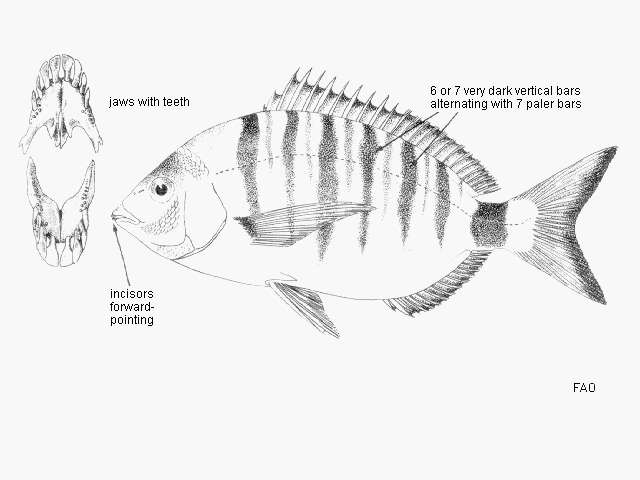
Diplodus vulgaris (Geoffroy Saint-Hilaire, 1817) (Common two-banded seabream)
A euryhaline species inhabiting rocky and sometimes sandy bottoms to depths of 160 m, but more commonly in less than 50 m. The young are sometimes found in seagrass beds. Adults feed on crustaceans, worms and mollusks . Important food fish.
Anthias anthias (Linnaeus, 1758) (Swallowtail seaperch)
Lives amongst rocks, gravel, coral and in submarine caves on the continental shelf and upper slope. Nocturnal. Feeds on crustaceans and small fishes. Protogynous.
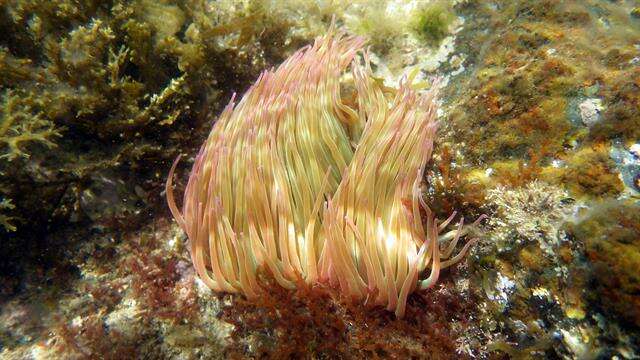
Anemonia viridis (Forskål, 1775) (Snakelocks anemone)
Paramuricea clavata (Risso, 1826)
Sparus aurata Linnaeus, 1758 (Gilt head bream)
Found in seagrass beds and sandy bottoms as well as in the surf zone commonly to depths of about 30 m, but adults may occur to 150 m depth. A sedentary fish, either solitary or in small aggregations. In spring, they ...
Lire la suite
Lire la suite
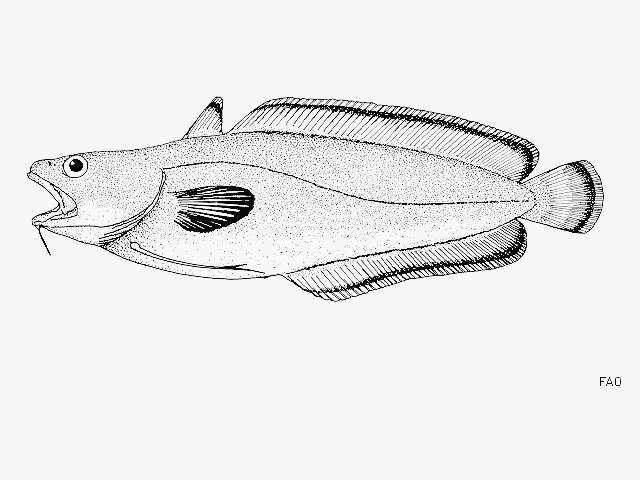
Phycis phycis (Linnaeus, 1766) (lesser forkbeard)
Found on hard and sandy-muddy bottoms near rocks at 100-650 m, but sometimes taken at greater depths . Nocturnal, hiding between rocks during the day . Feed on small fish and various invertebrates .
Diplodus sargus sargus (Linnaeus, 1758) (White seabream)
Inhabits coastal rocky reef areas and Posidonia oceanica beds. Like other sparids, it is very active and frequents the surf zone, primarily at dawn . Feeds on shellfish and other benthic invertebrates which it picks from the sediment .
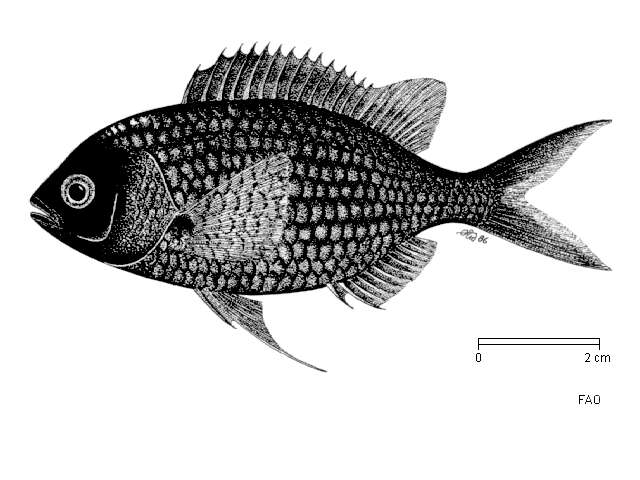
Chromis chromis (Linnaeus, 1758) (Mediterranean chromis)
Form small shoals in midwater above or near rocky reefs or above seagrass meadows (Posidonia. Feed on small planktonic or benthic animals . Reproduce in summer . Eggs characterised by adhesive filaments are nested on rocky or sandy bottoms . Males guard the eggs .
Echinaster sepositus (common starfish)
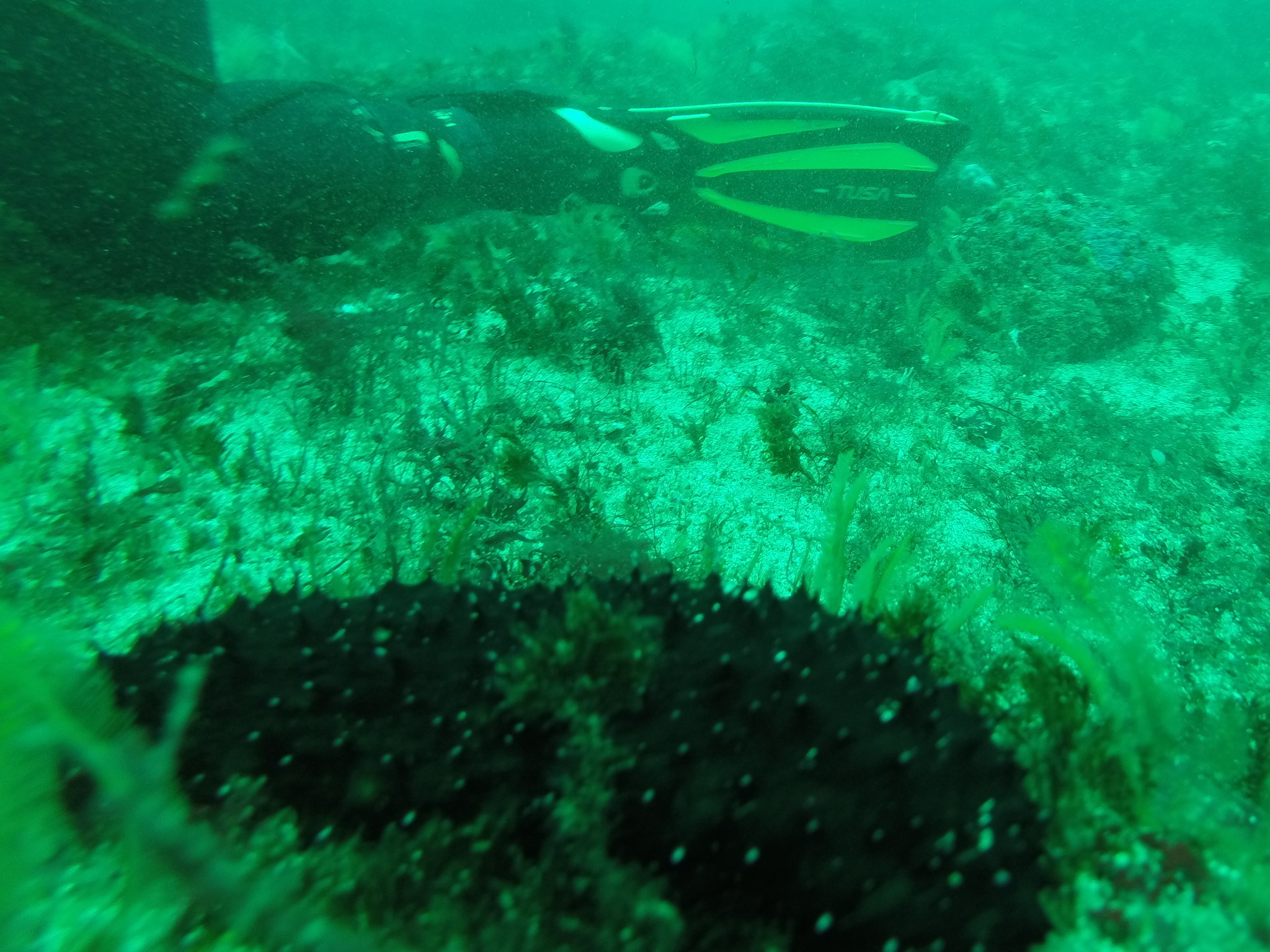
Holothuria forskali Chiaje, 1841
Diplodus puntazzo (Cetti, 1777) (Sharpsnout seabream)
Benthopelagic marine species. Gregarious species living in coastal waters on rocky or sandy bottoms, up to 1 50 m . Younger individuals can also be found in brackish waters and may live in littoral pools , the adults o...
Lire la suite
Lire la suite
Diplodus cervinus (Lowe, 1838) (Zebra seabream)
Coris julis (Linnaeus, 1758) (Mediterranean rainbow wrasse)
Occurs in the littoral zone, near rocks and eelgrass beds. Usually found between 1-60 m, but old males stay in deeper water. Found in deeper waters during winter. Sometimes solitary, among rocks, often with numerous...
Lire la suite
Lire la suite
Salaria pavo (Risso, 1810) (Peacock blenny)
Occur in the intertidal zone and shallow bottoms, on rocks or sand between pebbles and vegetation . Often in brackish waters down to 5 ppt . Inhabit crevices or piddock holes, males remain in cavities above water-lev...
Lire la suite
Lire la suite
Partager sur les Réseaux Sociaux
- Facebook:

Personnalisez le texte de partage et son emplacement (mur, page, ...) ou envoyez le en tant que message privé à un de vos amis
- Twitter: Tweet personnalisez votre tweet
- Google Plus:
Lien direct vers cette plongée
- Lien complet :
- Lien abrégé :


 Diveboard participe aujourd'hui au concours de startups Techcrunch Disrupt. Montrez que vous aimez Diveboard en votant pour nous !