


 Simon SaȜd


 Égypte

-
Nº1
 Date : 2011-11-26 - 10:20
-
 Profondeur Max: 6m Durée : 20mins
Site de plongée

- Temp: Surf 20°C Fond 26°C
- Type de plongée : Entrainement, Récif
- Visibilité : Bonne Type d'eau Salée
Equipement particulier utilisé
- Détendeur: Scubapro - MK17 / S600
- Stab: Scubapro - T-ONE
- Lest : 12 kg
Récemment sur Hurghada


Photos récentes sur Hurghada
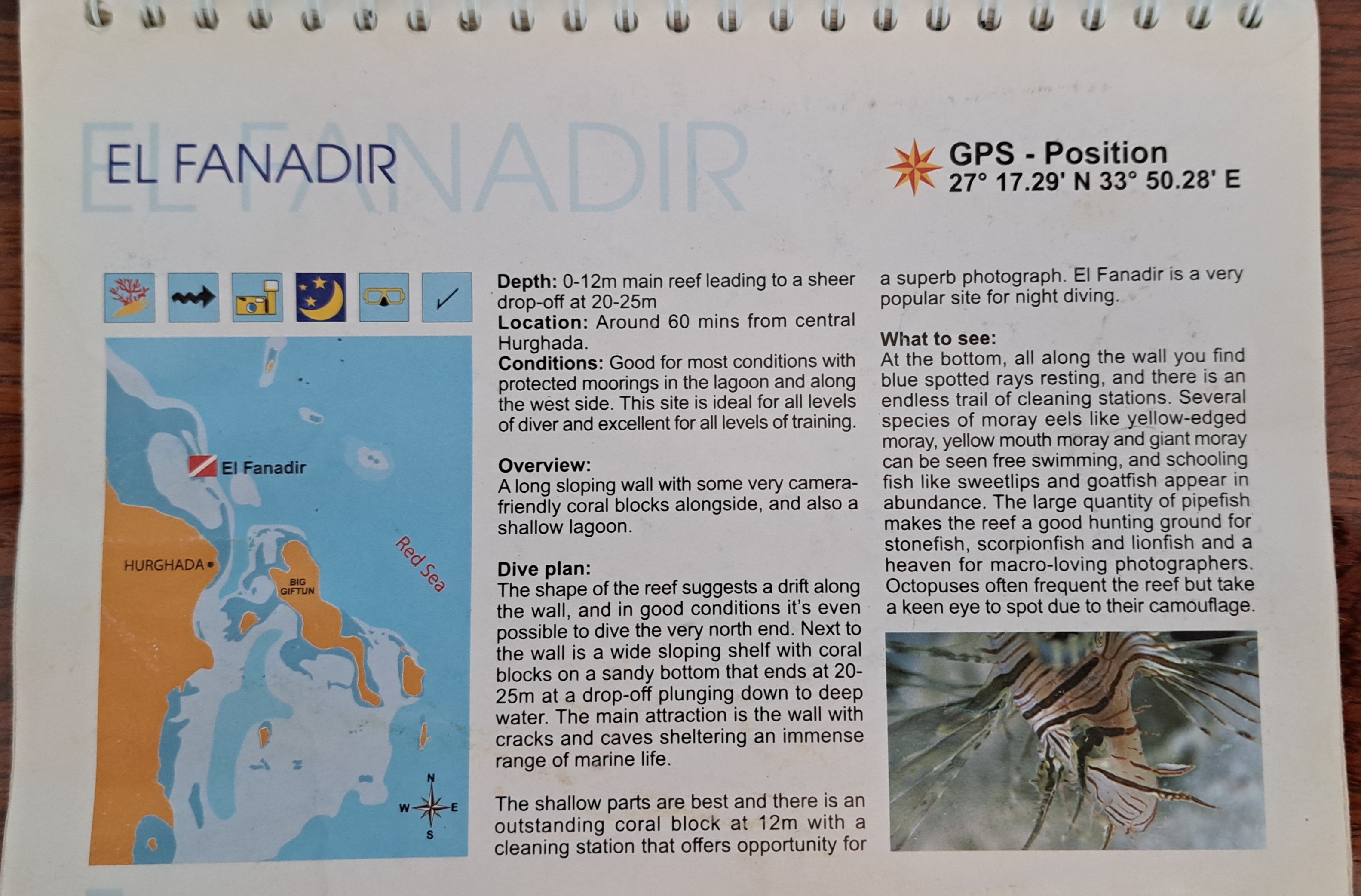
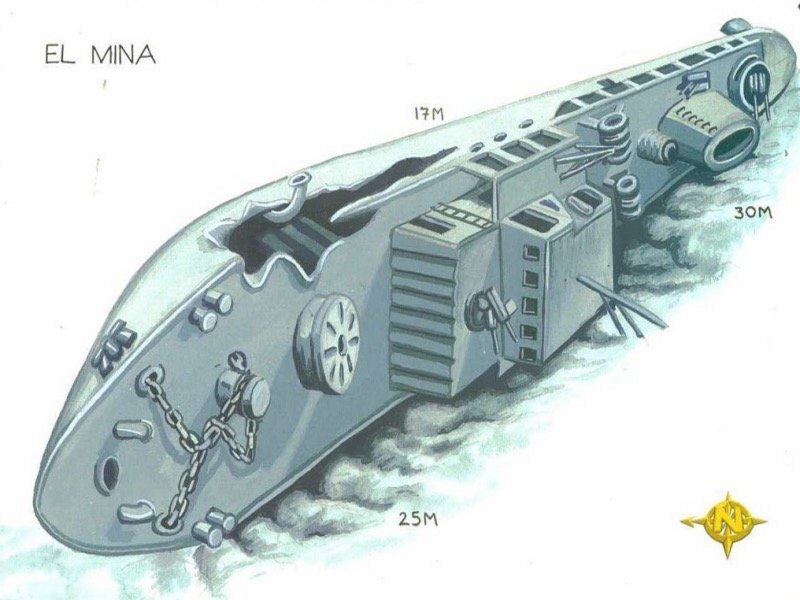
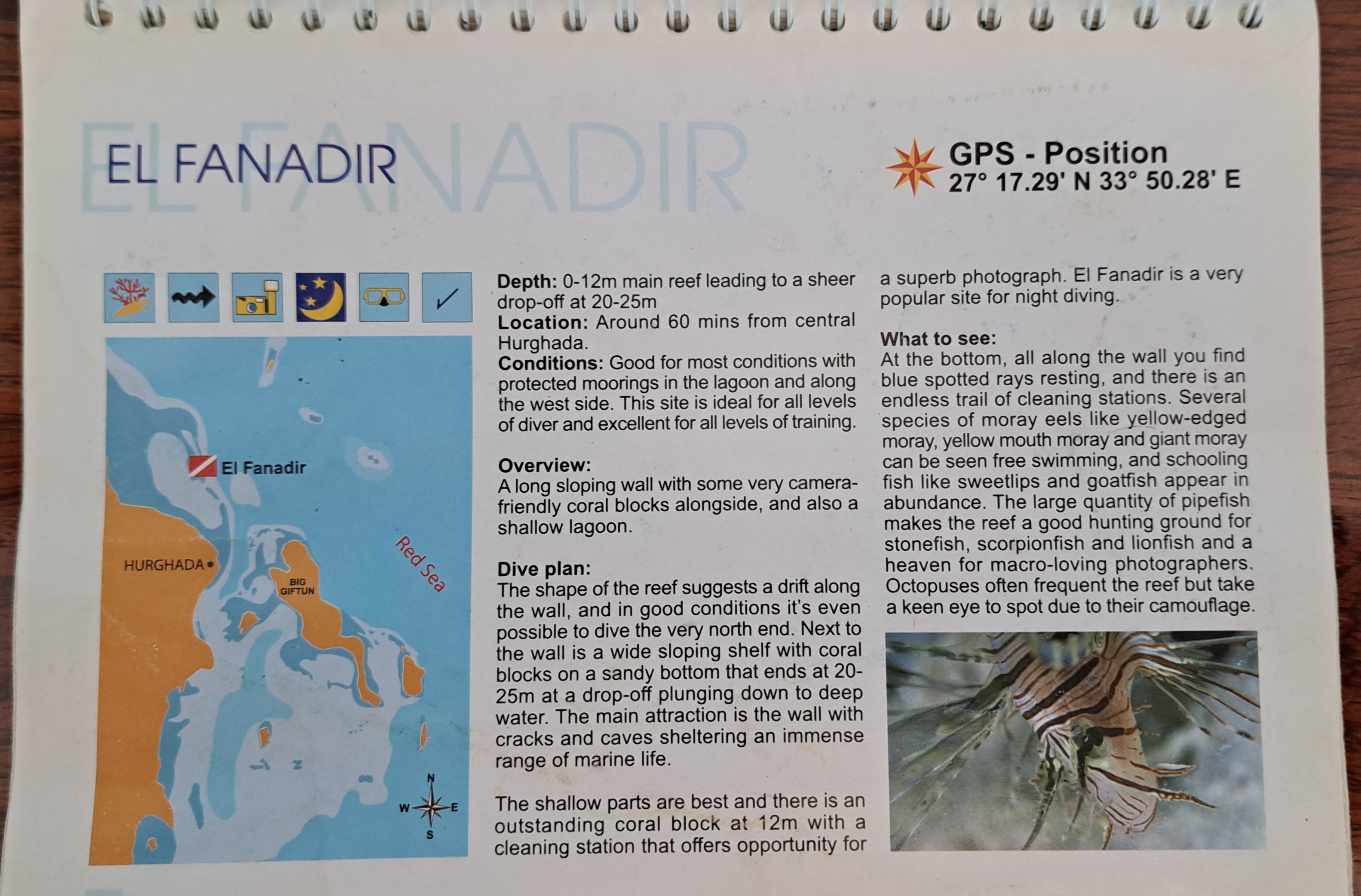

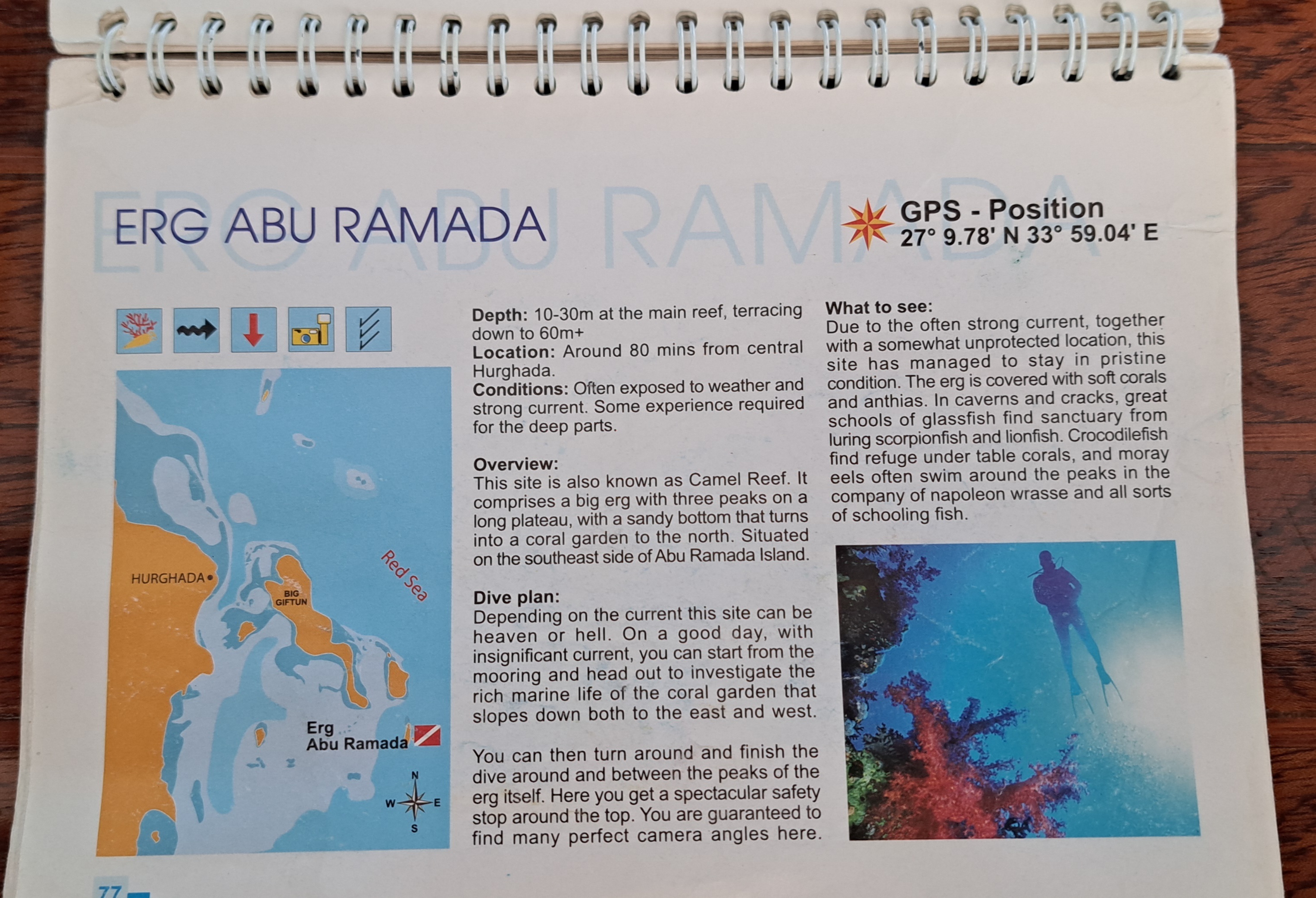



Centre de plongée & Palanquée
 Plongée avec Maged Tiger
 Palanquée :
Ismail

URL pour ce spot :
- Site :
- Pays
- Zone :
- Mer/Océan/Lac/Rivière :
Profil de plongée
- 1. Air
- 15L Aluminium 200 → 95 bar
- Profondeur moyenne: m
- 2. Air
- 0L Steel
- Profondeur moyenne: 0m
Données fournies par EOL.org














Espèces identifiées
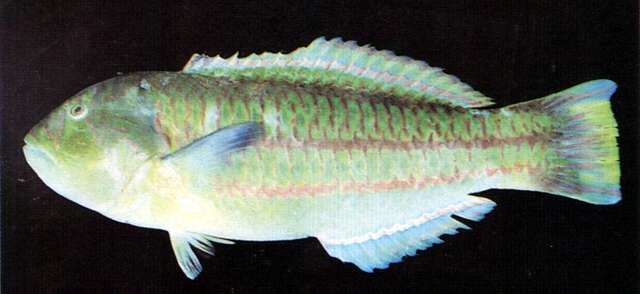
Thalassoma purpureum (Forsskål, 1775) (Surge wrasse)
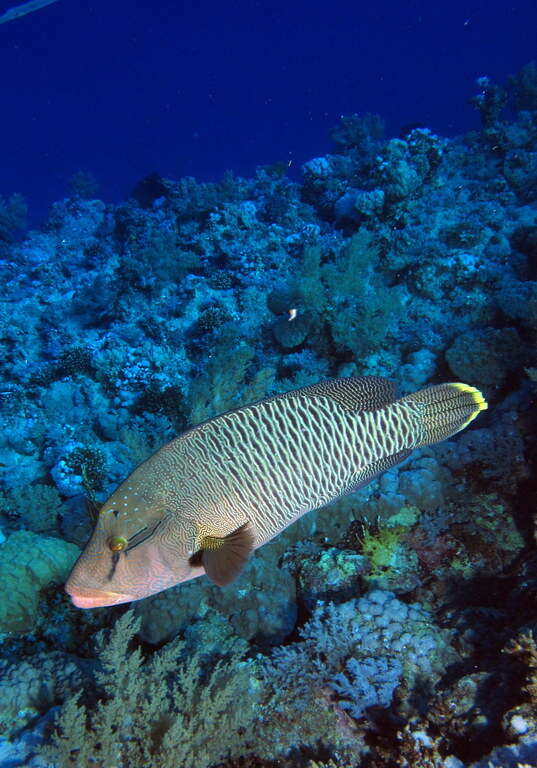
Cheilinus undulatus Rüppell, 1835 (Humphead wrasse)
Humphead wrasses are extremely long-lived, known to survive for at least 30 years, and taking around five to seven years to reach sexual maturity . Adults are usually solitary, spending the day roaming the reef and ret...
Lire la suite
Lire la suite
Pterois antennata (Bloch, 1787) (Broadbarred firefish)
Occurs in lagoon and seaward reefs. Hides in crevices under rocks and coral formations during the day and hunts at night. Typically with head towards the safety of their hide-out or narrow passage . Feeds on shrimps...
Lire la suite
Lire la suite
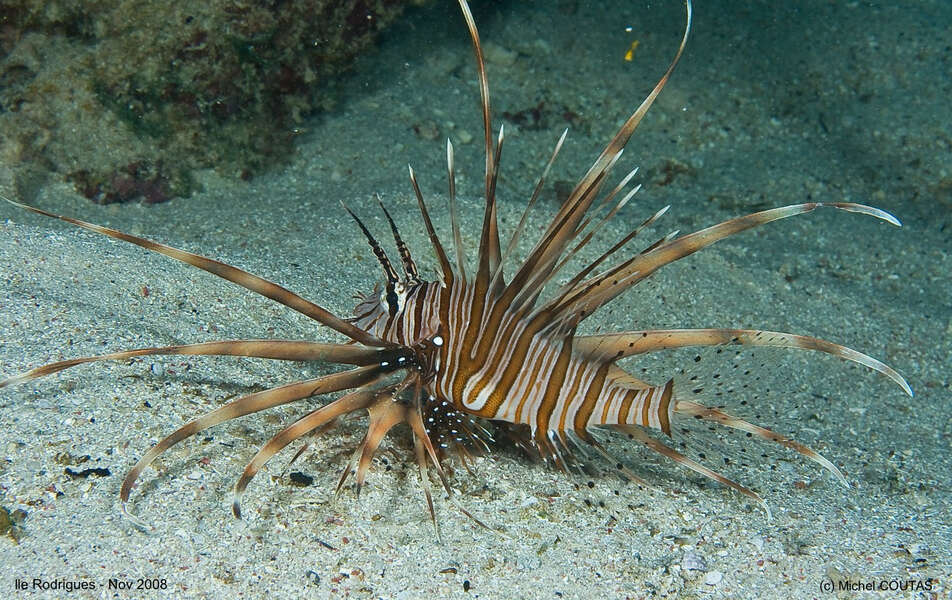
Pterois volitans (Linnaeus, 1758) (Red lionfish)
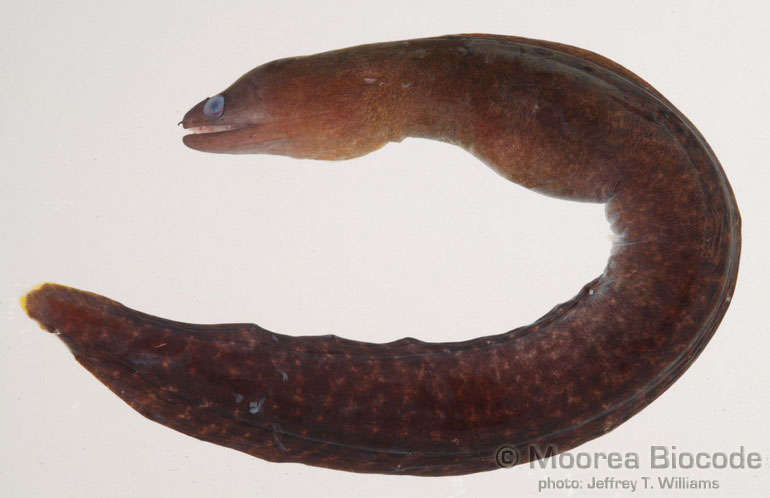
Gymnothorax buroensis (Bleeker, 1857) (Vagrant moray)
Gymnothorax flavimarginatus (Rüppell, 1830) (Yellow-edged moray)
Dascyllus aruanus (Linnaeus, 1758) (black-and-white damselfish)
Territorial, inhabit shallow lagoon and subtidal reef flats. Form large aggregations above staghorn Acropora thickets or in smaller groups above isolated coral heads. Feed on zooplankton, benthic invertebrates, and a...
Lire la suite
Lire la suite
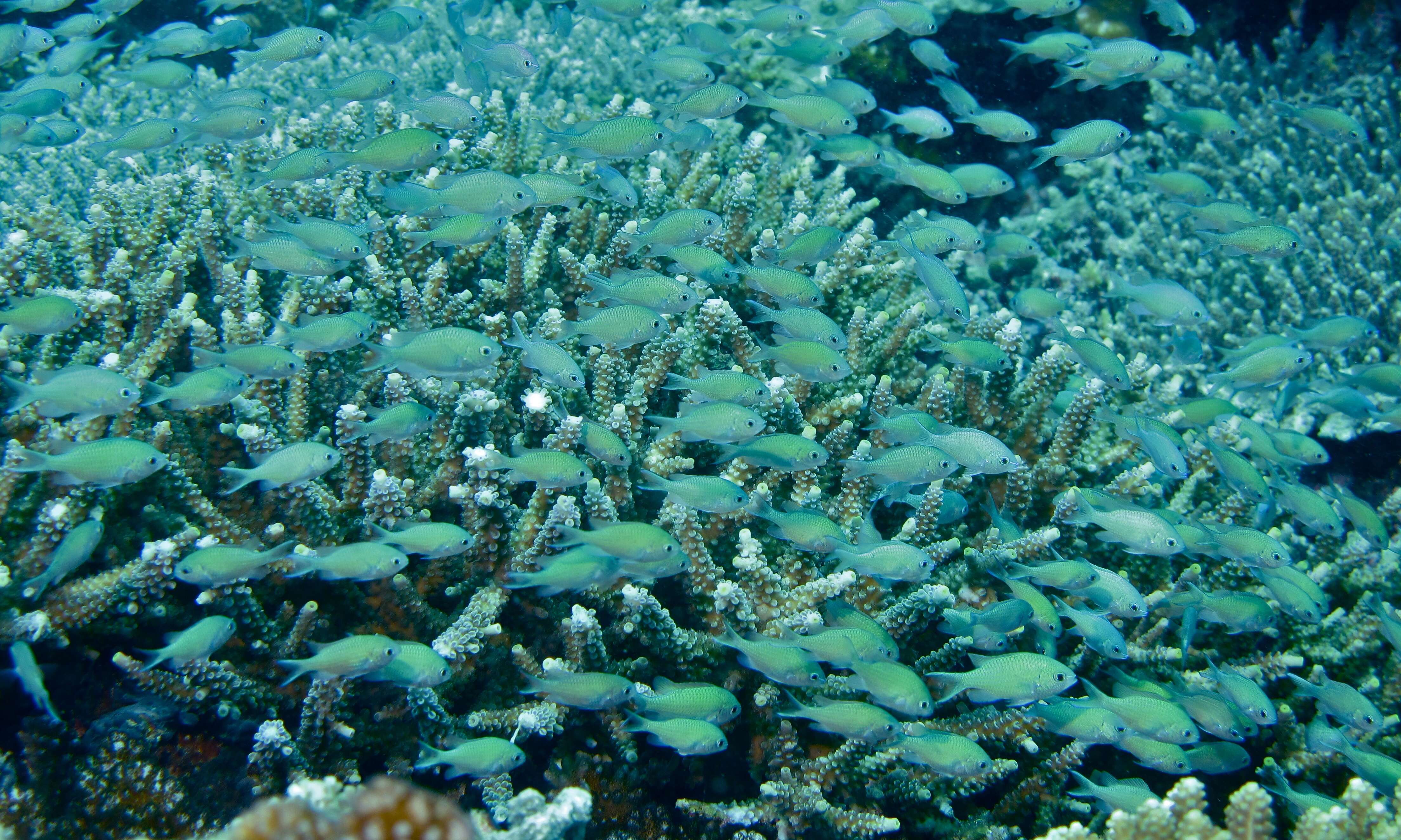
Chromis viridis (Cuvier, 1830) (blue-green chromis)
Found in large aggregations above thickets of branching Acropora corals in sheltered areas such as subtidal reef flats and lagoons. Juveniles closely tied to individual coral heads . Phytoplankton feeders. Breeding ...
Lire la suite
Lire la suite
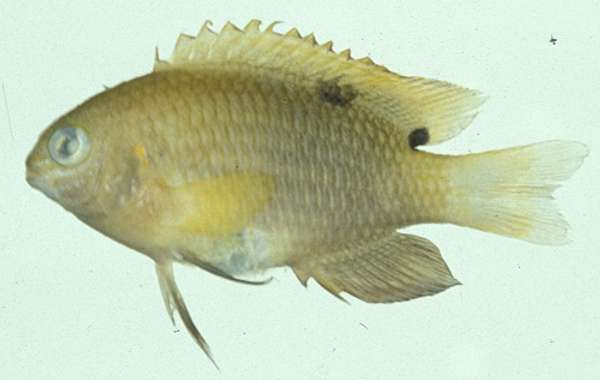
Pomacentrus sulfureus Klunzinger, 1871 (Sulfur damsel)
Inhabits inshore coral reefs, in areas with rich-coral growth .
Chrysiptera annulata (Peters, 1855) (Footballer demoiselle)
Inhabits lagoon and inshore weed and sand flats.
Chrysiptera unimaculata (Cuvier, 1830) (Onespot demoiselle)
Found solitarily or in small groups among coastal algal reefs, rubble or over open beach-rock of reef flats exposed to moderate surge and feeds mainly on benthic algae .
Neopomacentrus cyanomos (Bleeker, 1856) (Regal demoiselle)
Inhabits inshore and offshore coral reefs; also in harbors and protected outer reef slopes and current prone habitats. Form schools in harbors in depths from near surface to about 25 m .
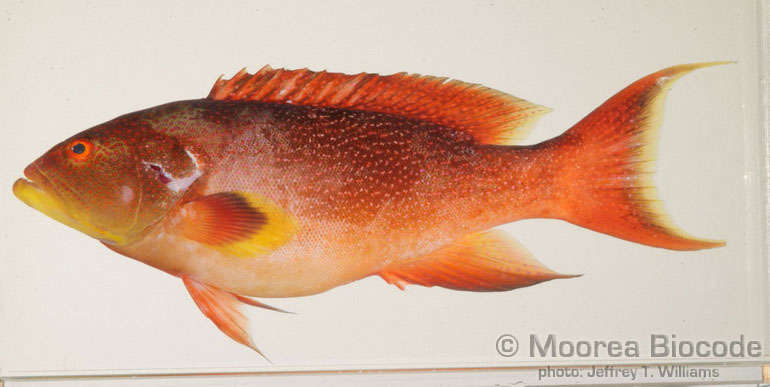
Variola louti (Forsskål, 1775) (lunartailed rockcod)
Usually seen in clear-water areas at depths below 15 m, and prefers islands and offshore reefs rather than continental shores. Feeds mainly on fishes, and on crabs, shrimps and stomatopods. It is highly appreciated f...
Lire la suite
Lire la suite
Pocillopora damicornis (Linnaeus, 1758) (Cauliflower coral)
zooxanthellate
Leptastrea transversa Klunzinger, 1879 (Crust coral)
zooxanthellate
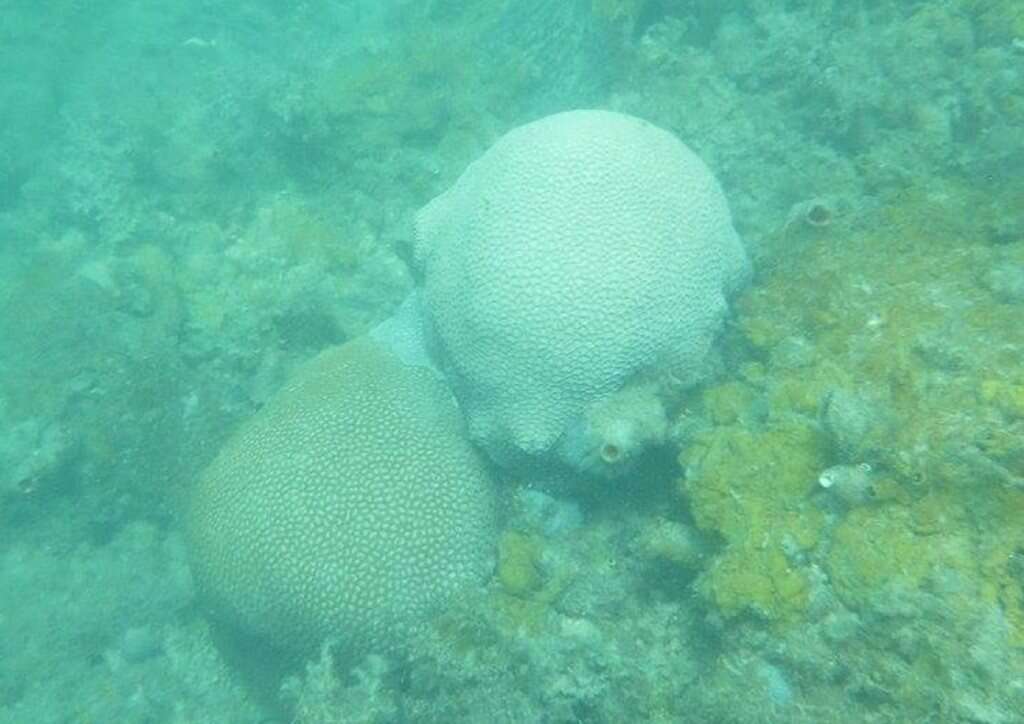
Favia stelligera (Dana, 1846) (Knob coral)
zooxanthellate
Favites flexuosa (Dana, 1846) (Larger star coral)
zooxanthellate
Pristis zijsron Bleeker, 1851 (Longcomb sawfish)
This species often rests on the bottom with the saw held upwards at an angle . It feeds on slow-moving fish that form shoals, including mullet, which are tackled by swiping at them with the side of the saw; they may al...
Lire la suite
Lire la suite
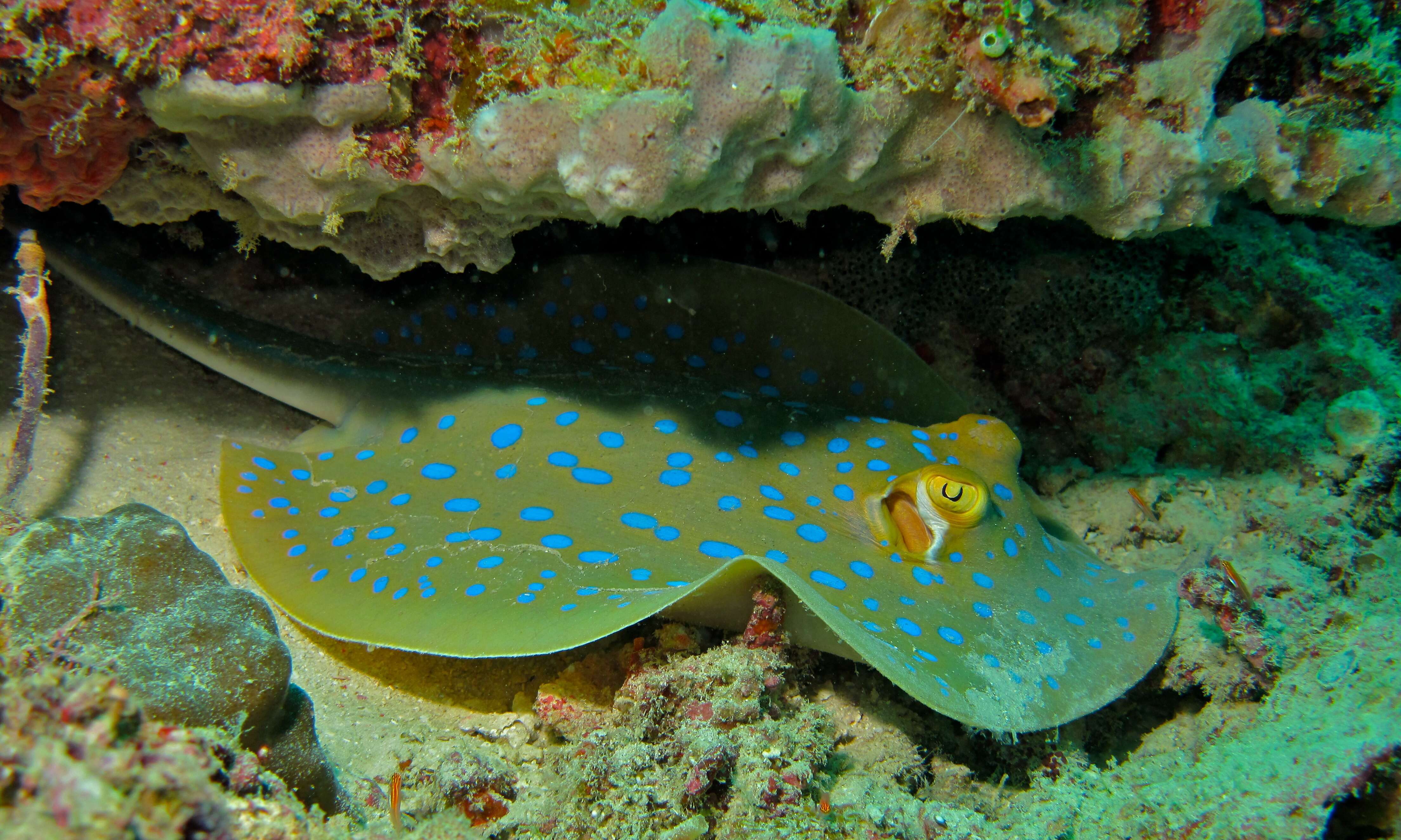
Taeniura lymma (Forsskål, 1775) (Bluespotted ribbontail ray)
Blue-spotted stingrays live alone or in small groups , migrating in large schools into shallow sandy areas on the rising tide in order to feed, and dispersing back into the ocean as the tide falls to shelter in the cor...
Lire la suite
Lire la suite
Oblada melanura (Linnaeus, 1758) (Saddled seabream)
Gregarious, forms aggregations over rocky bottoms or seagrass beds . Omnivorous but feeds mainly on small invertebrates . Important food fish.
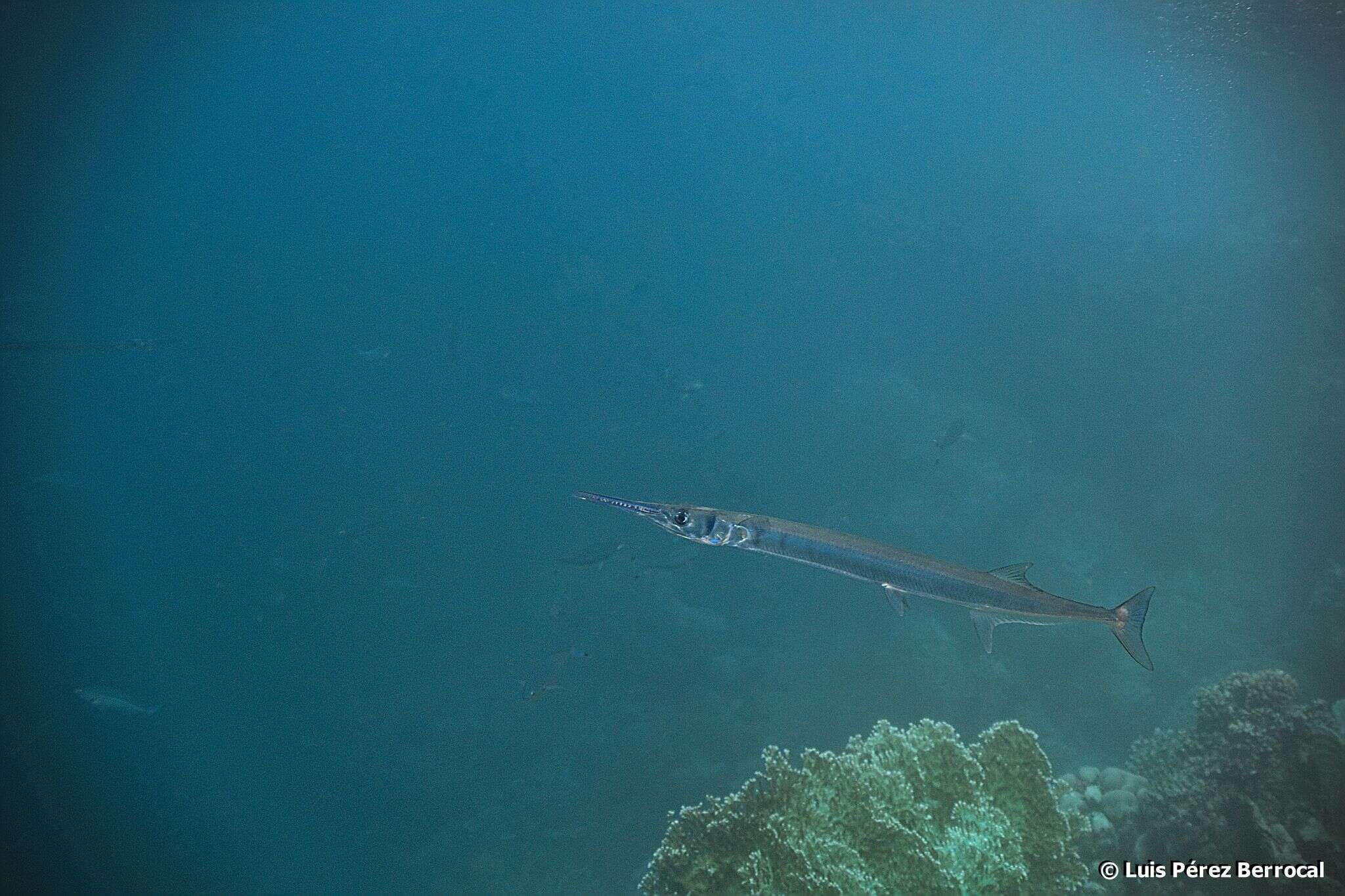
Tylosurus choram (Rüppell, 1837) (Red Sea houndfish)
Oviparous . Eggs may be found attached to objects in the water by tendrils on the egg's surface .
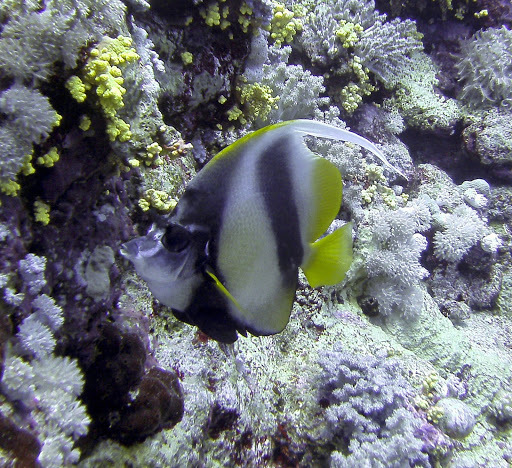
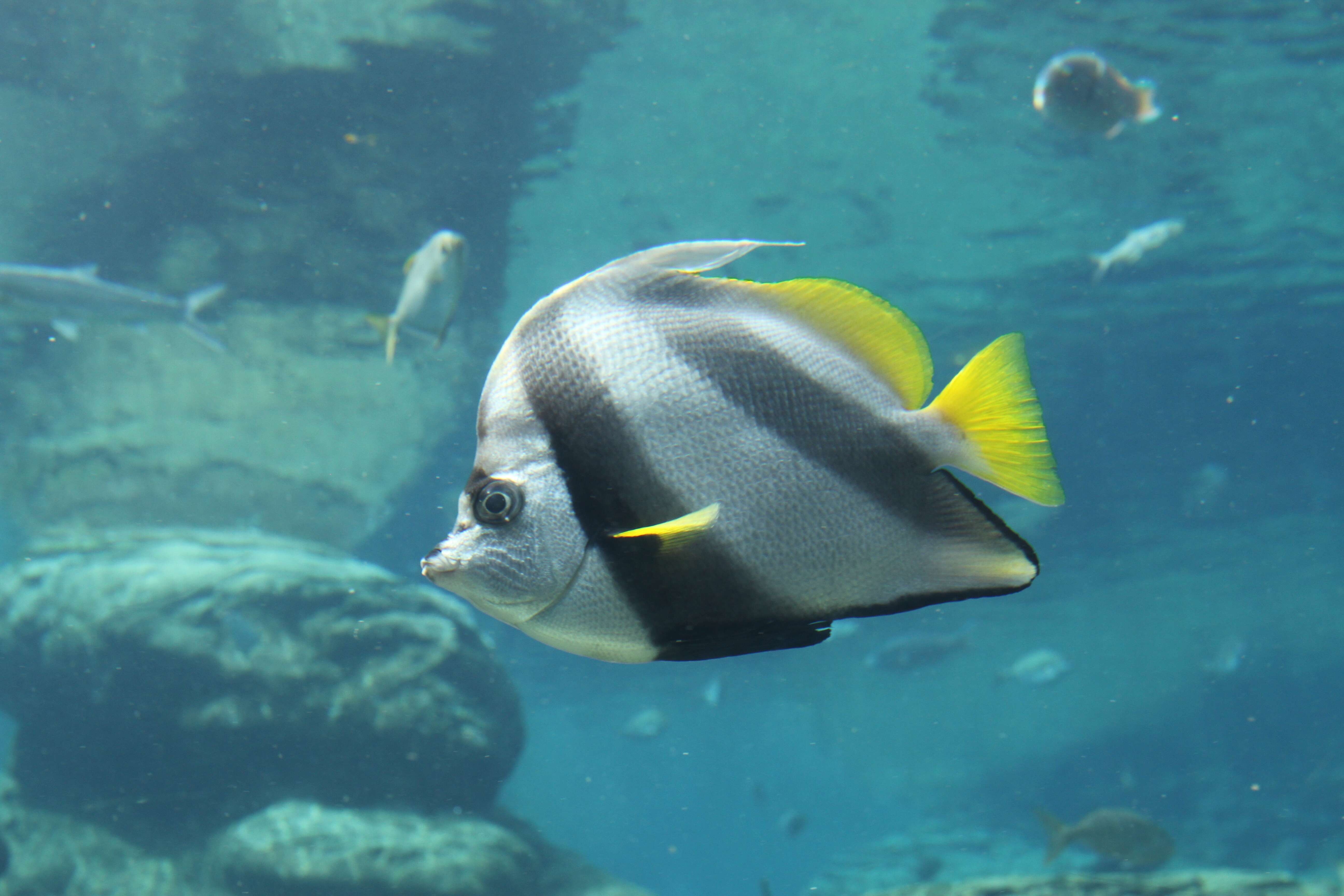
Heniochus intermedius Steindachner, 1893 (Red Sea bannerfish)
Found on coral slopes Juveniles in large groups at base of reef, sometimes with H. diphreutes; adults usually solitary or paired, occasionally in groups . Feed on zooplankton and benthic invertebrates . Oviparous , monogamous . Form pairs during breeding .
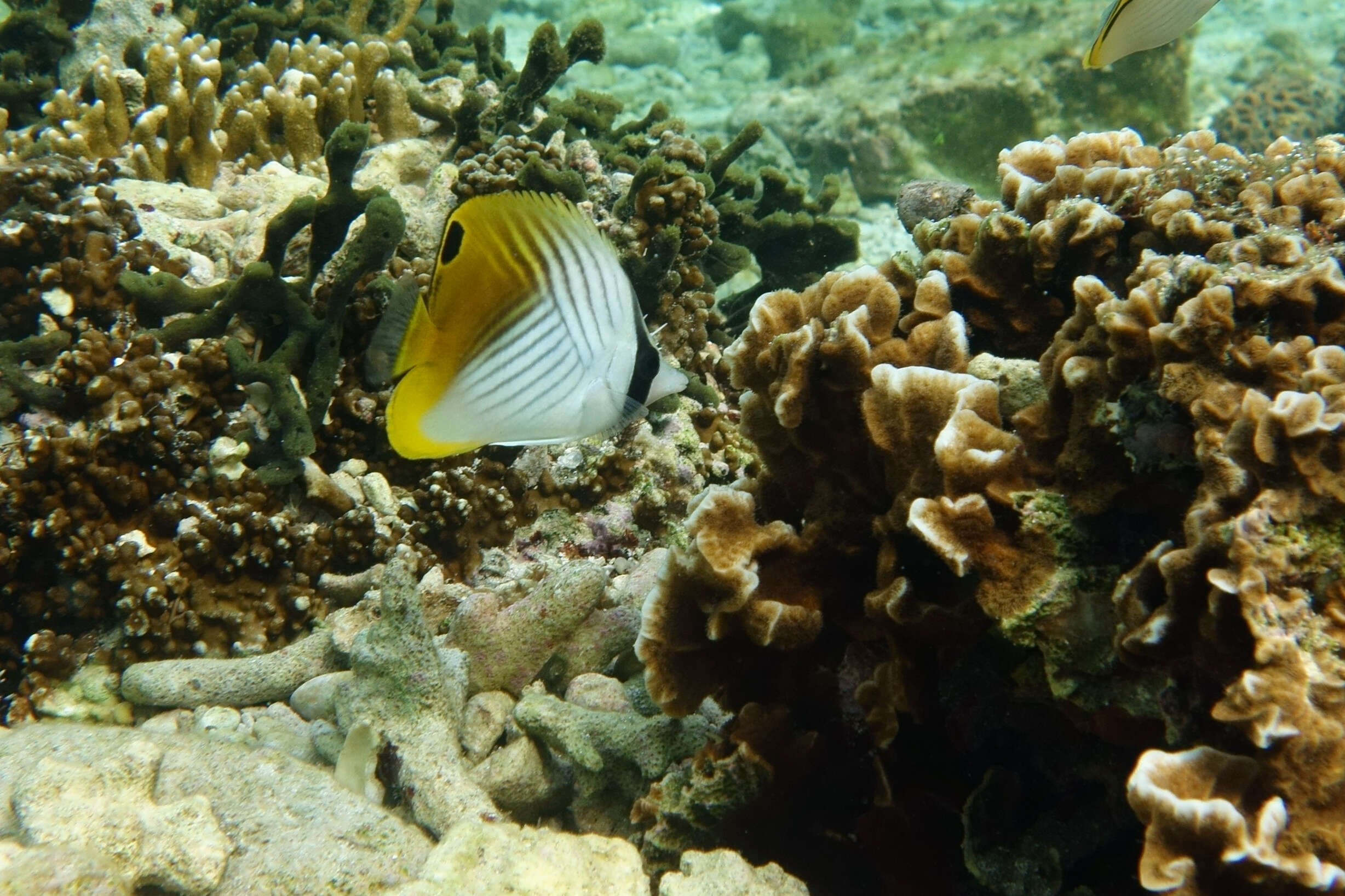
Chaetodon auriga Forsskål, 1775 (Cross-stripe butterfly)
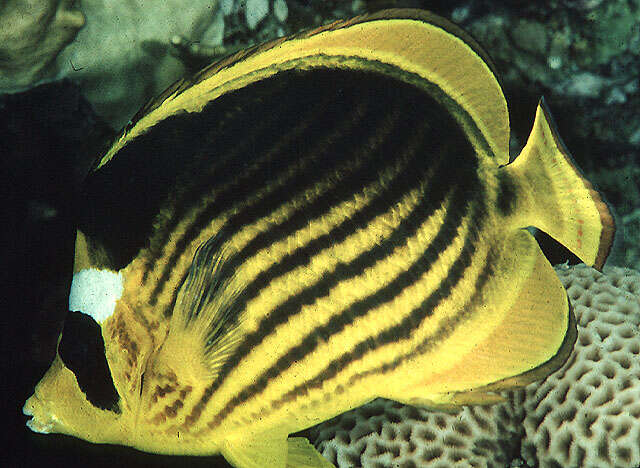
Chaetodon fasciatus Forsskål, 1775 (Diagonal butterflyfish)
Commonly found on reef flats . Usually solitary or in pairs in areas with rich coral growth. Monogamous . Feed mainly on coral polyps . Oviparous . Form pairs during breeding .
Heniochus acuminatus (Linnaeus, 1758) (Pennant coralfish)
Inhabit deep, protected lagoons and channels, and the deeper parts of outer reef slopes. Juveniles are often solitary while adults occur in pairs . A planktivorous species that generally remains within a few meters o...
Lire la suite
Lire la suite
Chaetodon lineolatus Cuvier, 1831 (Line butterflyfish)
Occur in lagoon and seaward reefs, usually in pairs in coral rich areas . Benthopelagic . Feed mainly on coral polyps and anemones, but also on small invertebrates and algae . Largest species in the genus . Oviparous . Form pairs during breeding .
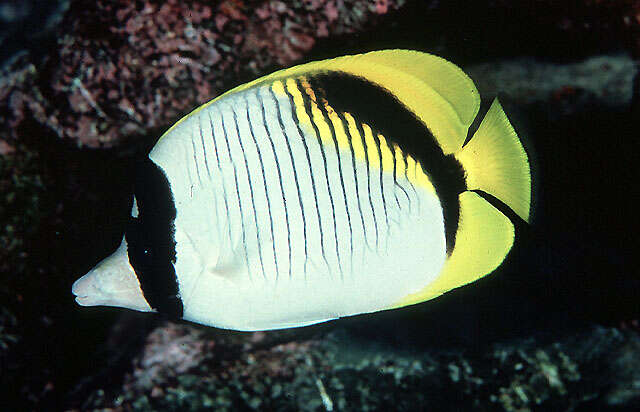
Chaetodon larvatus Cuvier, 1831 (Hooded butterflyfish)
Usually seen in pairs, frequently in association with plate-like heads of Acropora coral. Feed mainly on coral polyps. . Territorial . Oviparous . Form pairs during breeding .
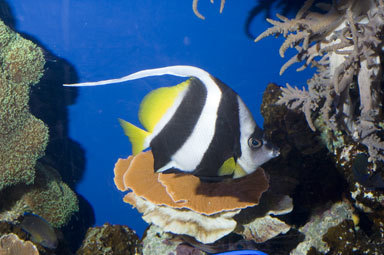
Heniochus diphreutes Jordan, 1903 (False moorish idol)
Occur primarily along outer reef slopes, in current channels. Juveniles in aggregations around isolated patch reefs, adults in large schools well above the bottom . In Indonesia, adults most common in depth 40-50 m, ...
Lire la suite
Lire la suite
Canthigaster pygmaea Allen & Randall, 1977 (pPygmy toby)
Inhabits coral reefs. Found hidden in holes.
Lutjanus sebae (Cuvier, 1816) (Emperor red snapper)
Occur in the vicinity of coral or rocky reefs , often over adjacent sand flats and gravel patches . Also trawled in deeper water on relatively flat bottoms. Juveniles are frequently commensal with sea urchins . Juve...
Lire la suite
Lire la suite
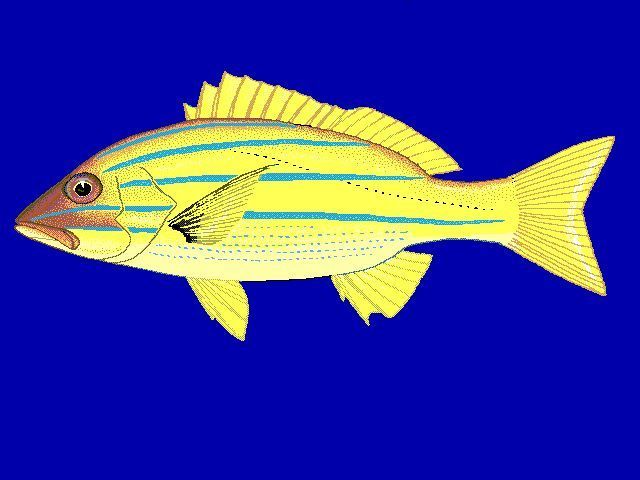
Lutjanus kasmira (Forsskål, 1775) (bluebanded sea perch)
Lutjanus fulviflamma (Forsskål, 1775) (Dory snapper)
Inhabit coral reefs . Often in large aggregations with Lutjanus kasmira and Lutjanus lutjanus . Juveniles are sometimes found in mangrove estuaries or in the lower reaches of freshwater streams. Adults usually schoo...
Lire la suite
Lire la suite
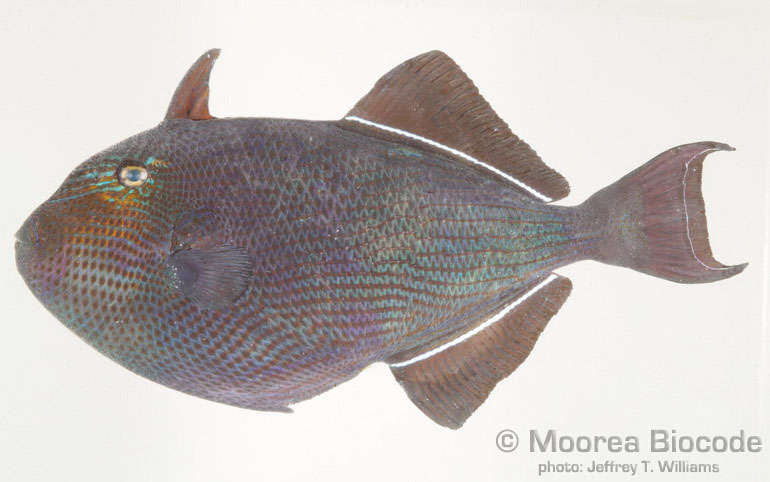
Melichthys niger (Bloch, 1786) (Black triggerfish)
Pseudanthias squamipinnis (Peters, 1855) (Sea goldie)
Found above coral outcrops or patch reefs of clear lagoons, channels, or outer reef slopes. Form large aggregations. Feed on zooplankton . A protogynous hermaphrodite . Males are territorial and haremic . Color pa...
Lire la suite
Lire la suite
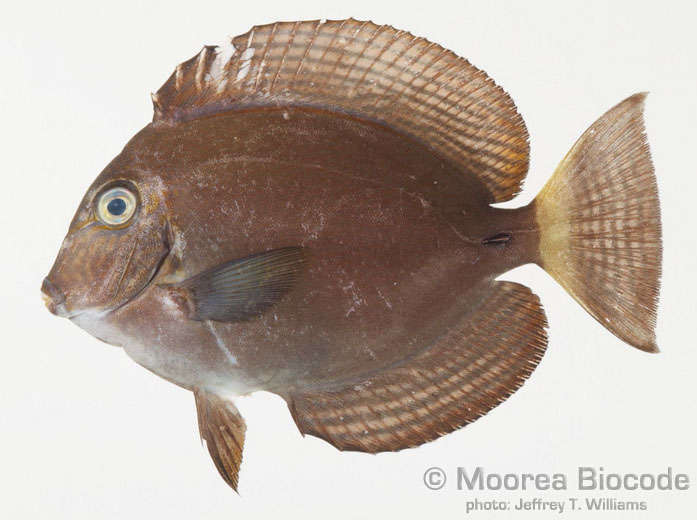
Zebrasoma xanthurum (Blyth, 1852) (Yellowtail tang)
Often found in groups in coral-rich areas or on rocky bottoms . It small and numerous pharyngeal teeth suggest a diet that consists mainly of filamentous algae .
Zebrasoma veliferum (Bloch, 1795) (Desjardin's sailfin tang)
Acanthurus blochii Valenciennes, 1835 (whitetail surgeonfish)
Occurs in outer lagoon and seaward reefs, usually seen in small groups and school in some oceanic locations . Benthopelagic . Feeds primarily on the algal film covering compacted sand, ingesting the usual component o...
Lire la suite
Lire la suite
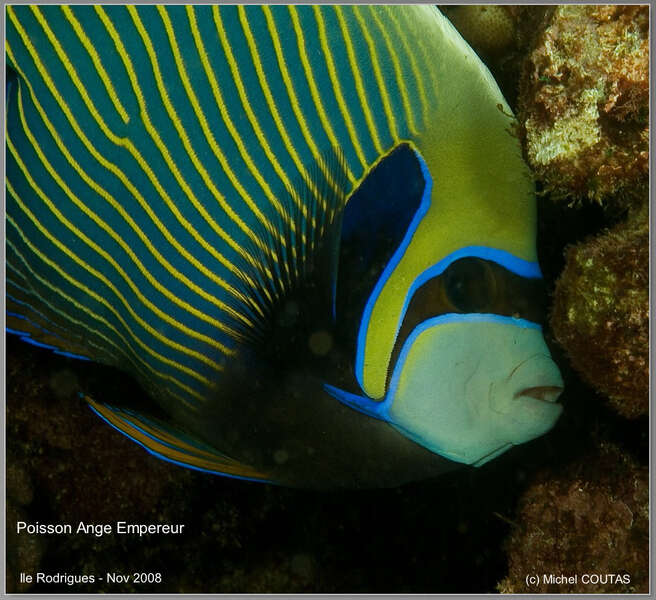
Pomacanthus imperator (Bloch, 1787) (Angel fish)
Juveniles are encountered under ledges, or in holes of outer lagoon patch reefs or semi-protected areas of exposed channels and outer reef flats. Subadults move to reef front holes and surge channels. Large adults in...
Lire la suite
Lire la suite
Apolemichthys xanthurus (Bennett, 1833) (Yellowtail angelfish)
Inhabits coral-rich areas . Found singly or in pairs.
Pygoplites diacanthus (Boddaert, 1772) (Bluebanded angelfish)
Occurs in coral rich areas of lagoon and seaward reefs to a depth of 48 m or more. Often found in the vicinity of caves and feeds on sponges and tunicates. Solitary or in pairs, or in groups. Frequently exported through the aquarium trade . Rarely survives in the aquarium.
Sargocentron rubrum (Forsskål, 1775) (Redcoat)
Found in coastal reefs ; silty reefs or wrecks in lagoons, bays, or harbors , may occur in aggregations; also found hidden in caves and cracks of rocks during the day , usually in areas subject to strong currents . Fe...
Lire la suite
Lire la suite
Priacanthus hamrur (Forsskål, 1775) (Moontail bullseye)
Uncommon species found in outer reef slopes and deep lagoon pinnacles from 8 to at least 80 m. In small aggregations, sometimes schools in oceanic locations . Feeds on small fish, crustaceans, and other small invertebrates . Generally marketed fresh, may be salted or dried .
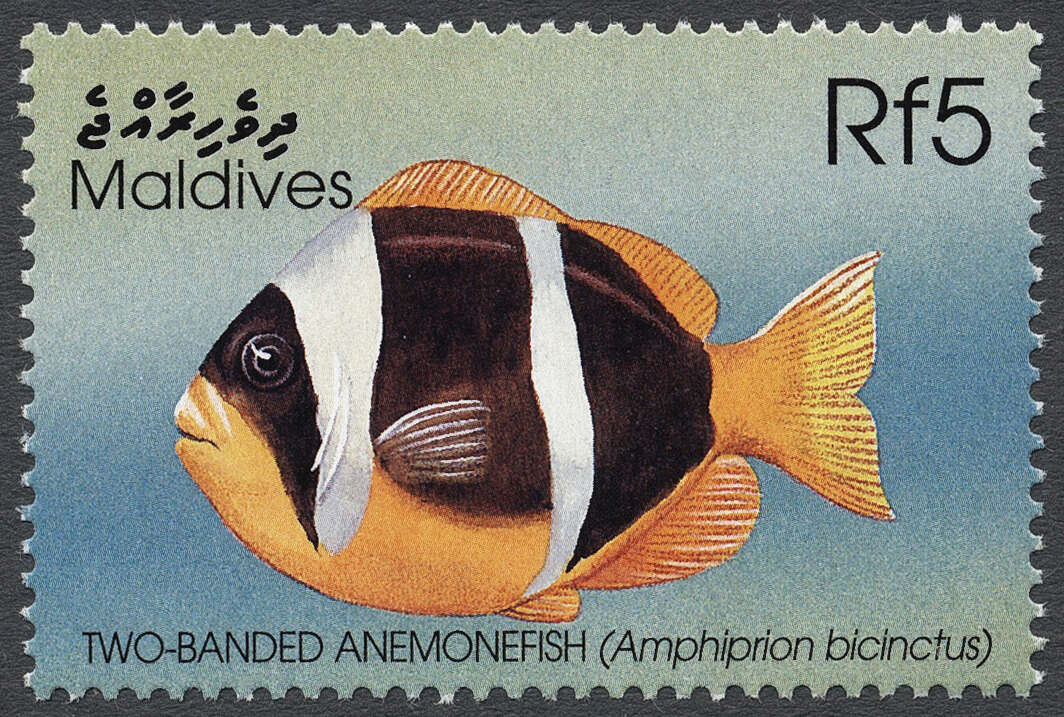
Amphiprion bicinctus Rüppell, 1830 (threebanded anemonefish)
Inhabits lagoons and outer reefs. Oviparous, with elliptical eggs . Monogamous . Has been reared in captivity . Associated with the anemones: Entacmaea quadricolor, Heteractis aurora, Heteractis crispa, Heteractis magnifica, and Stichodactyla gigantea .
Partager sur les Réseaux Sociaux
- Facebook:

Personnalisez le texte de partage et son emplacement (mur, page, ...) ou envoyez le en tant que message privé à un de vos amis
- Twitter: Tweet personnalisez votre tweet
- Google Plus:
Lien direct vers cette plongée
- Lien complet :
- Lien abrégé :


 Diveboard participe aujourd'hui au concours de startups Techcrunch Disrupt. Montrez que vous aimez Diveboard en votant pour nous !

























































































Intro